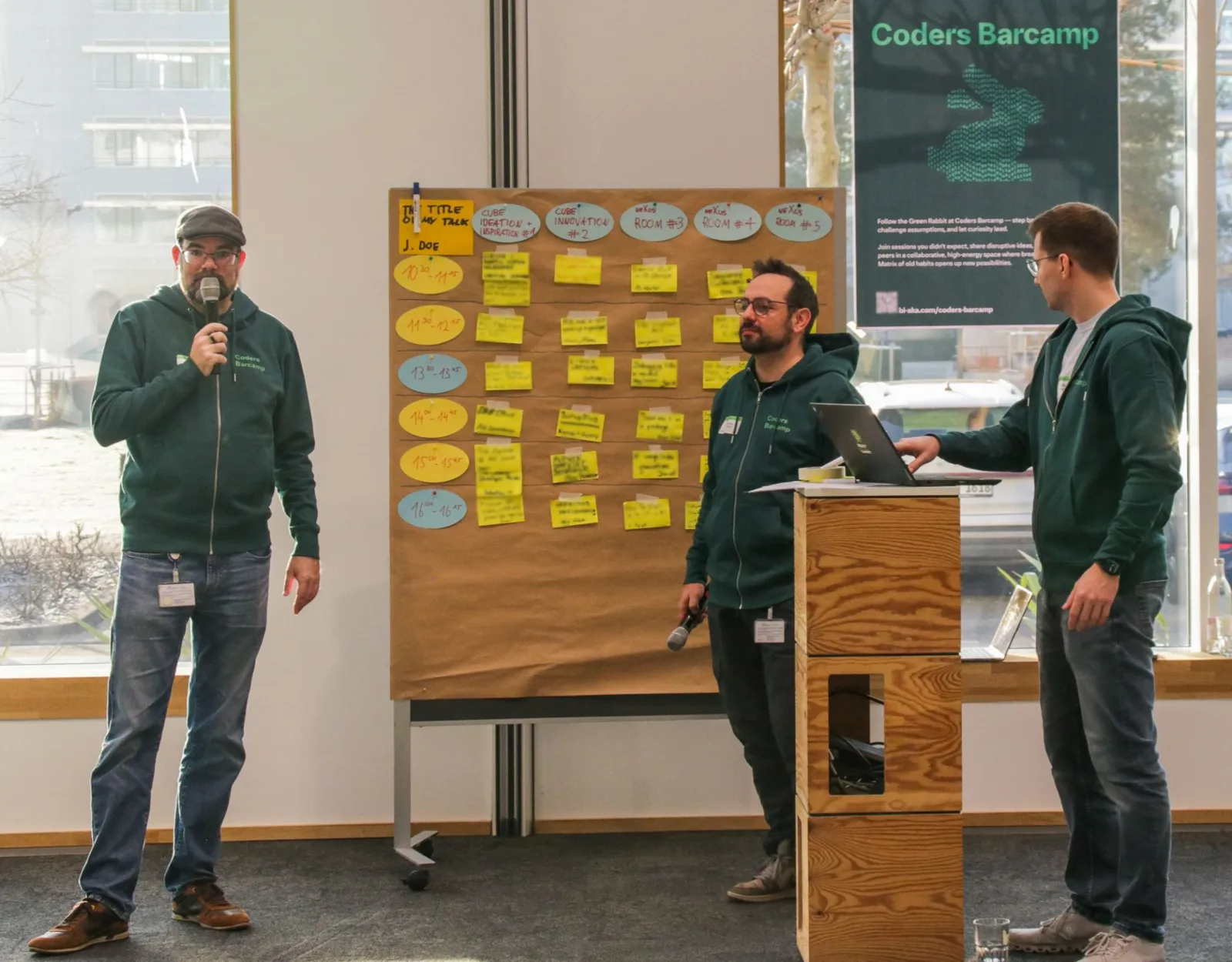
Weeks of planning. Spreadsheets, forms, meetings. "Will this actually work?" thoughts.
Then the room fills up. Voices overlap, someone’s already at the whiteboard scribbling a session idea. Nearly 100 colleagues, coffee in hand, ready to fill a schedule that’s still empty, because they’re about to shape it themselves. And suddenly none of the stress matters. Markers come out, time slots fill up. It’s out of your hands now, in the best way.
What started two years ago as “Let’s run a barcamp — no preset agenda, engineers decide what gets discussed” turned into the second edition of Coders Barcamp at Boehringer Ingelheim last week. Nearly 100 colleagues. 30 sessions. 5 parallel tracks. Full capacity.
Barcamps were born in the developer community as "unconferences": participant-driven, spontaneous, no spectators. Bringing that format into a large regulated enterprise felt challenging: Would people show up without a polished agenda? Would they actually propose sessions?
They did. More than we had time for.
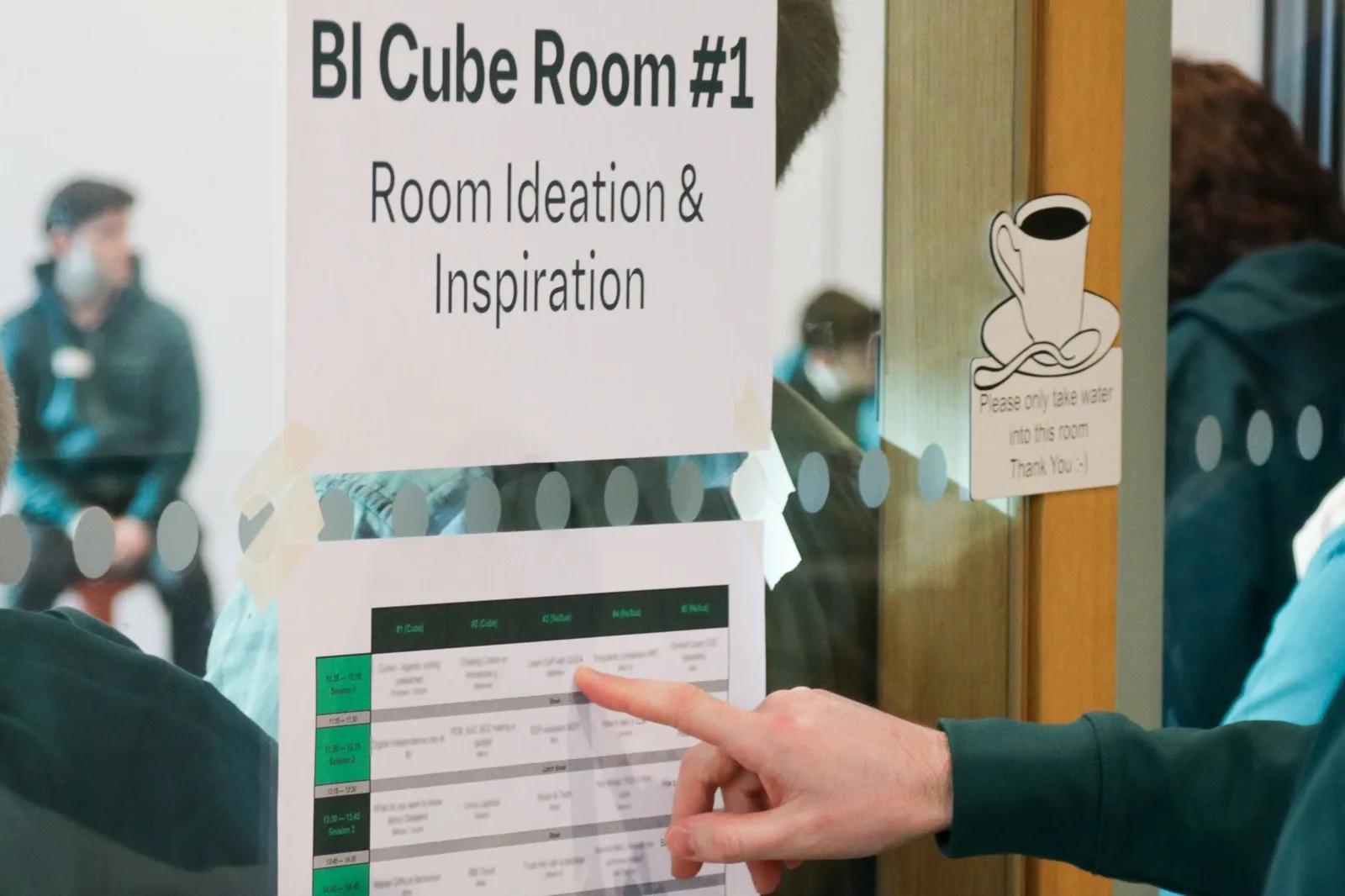
They connected, exchanged in hands-on sessions, and inspired each other around concrete topics of the organisation.
What we’ve learned facilitating this:
- Connection counts. The frontend dev from one site meets the data engineer from another. Months later, they’re collaborating on something neither could have built alone.
- Self-organisation scales. No programme committee needed. A whiteboard, time slots, and trust. Filled in 30 minutes.
- Culture is built in the gaps. The hallway conversations. The "wait, you solved that already?" moments. The energy that brings people back next year.
This wasn’t mandated from leadership. It grew bottom-up because engineers wanted a space to share and learn from peers across the organisation with a dedicated focus and fun day, beyond the weekly exchanges and dailies.
If you’re building developer communities inside your company: Start small, stay consistent, and trust that people want to connect.