Accessibility Espresso #3 ☕
March 26, 2026
|
|
{if %lastname != ''}{if %gender == 'female'}Dear Ms{elseif %gender == 'male'}Dear Mr{else}Dear Ms / Mr{/if}{if %title != ''} {%title}{/if} {%lastname}{else}Dear Reader{/if},
welcome to the new issue, this time featuring the following topics:
The Web Almanac 2025 reports data from 17.2 million websites, Bogdan Cerovac argues accessibility must be trained into AI models - not bolted on after, and a WCAG checklist finally sorted by what designers actually deliver.
I wish you an enjoyable read.
Best regards,
Jan Deppisch
|
|
⭐ Topic of the Week
|
|
|
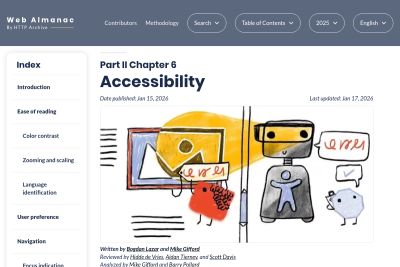
The 2025 Web Almanac accessibility chapter reveals that the median Lighthouse score improved to 85%. Key improvements include ARIA accessible names. A new AI section addresses how LLMs trained on inaccessible code may perpetuate accessibility problems.
|
|
|
📋 The Bigger Picture
|

|
|
Ted Drake lays out a three-phase framework for building an internal accessibility AI assistant: start with your own finalized policies and checklists, then layer in external design systems like IBM Carbon and GOV.UK, and finally structure everything as curated PDFs with a CSV index. The key insight is that AI systems are only as good as the sources you feed them — smaller, high-quality document sets outperform comprehensive dumps. Drake even published a GitHub repo with templates and automation scripts.
|
|
|
|
|
Staying curious and learning more about AI and where it can help with accessibility, I see a lot of work done with bolting it on instead of shifting it left. Seems that shift left needs us once again.
|
|
|
|
|
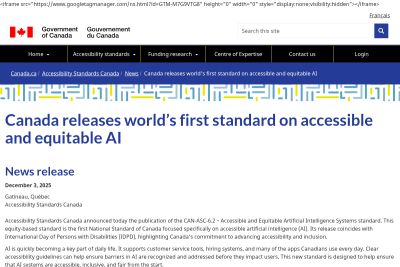
Accessibility Standards Canada has published CAN/ASC-2.1:2025, the world's first national standard for accessible and equitable AI. Developed with people with disabilities, it covers the full AI lifecycle - from training data through deployment - addressing bias, transparency, and assistive technology compatibility. The standard complements Canada's Accessible Canada Act and signals that AI regulation and disability rights are converging.
|
|
|
⚙️ In Practice
|
|
|
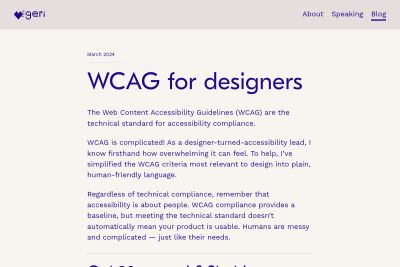
Geri Reid's WCAG Design Checklist reorganizes WCAG 2.2 success criteria by design category rather than conformance level -covering color and contrast, typography, layout and spacing, images, forms, links, focus states, motion, and more. Each checklist item maps directly to a specific WCAG criterion (with SC numbers) and explains the requirement in plain, designer-friendly language. The checklist is aimed at designers who need to bake accessibility into their deliverables before handoff, not retrofit after development. Covers Level A and AA criteria that designers can directly influence, filtering out the more developer-centric criteria.
|
|
|
|
|
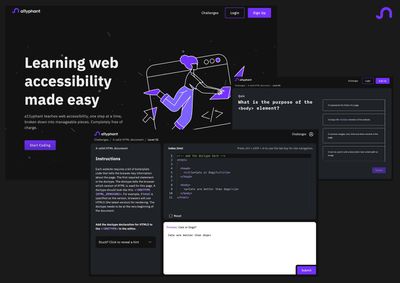
a11yphant is a free, open-source interactive learning platform that teaches web accessibility through hands-on coding challenges and multiple-choice quizzes. Built by Daniela Kubesch, Thomas Dax, and a team from Austrian universities, the platform covers topics like semantic HTML, headings, images, forms, buttons, links, and page structure. Learners write real HTML and CSS directly in the browser — no setup required — and get instant feedback on whether their code meets accessibility criteria. It fills a gap in the learning landscape by making accessibility practice-first rather than theory-first.
|
|
|

|
|
Blake Watson's 'HTML for People' is a free, beginner-friendly online book that teaches HTML to people with zero coding experience. The book walks readers through building a real, multi-page personal website from scratch — starting with what HTML actually is, through semantic elements like headings, lists, and landmarks, to publishing on Neocities. Watson explicitly frames the web as a medium that belongs to everyone, not just developers, and weaves accessibility principles naturally into every chapter rather than treating them as an afterthought.
|
|
|
|
View in browser
Unsubscribe
|
|
|
© 2026 Jan Deppisch ·
jandeppisch.de
|
|