Accessibility Espresso #2 ☕
March 10, 2026
|
|
{if %lastname != ''}{if %gender == 'female'}Dear Ms{elseif %gender == 'male'}Dear Mr{else}Dear Ms / Mr{/if}{if %title != ''} {%title}{/if} {%lastname}{else}Dear Reader{/if},
welcome to the new issue, this time featuring the following topics:
Axe-con sessions distilled into one blog post. Karl Groves calculates $347,060 in disruption costs per audit cycle. And Hashim Quraishi learns why adding role="link" to a button broke everything.
I wish you an enjoyable read.
Best regards,
Jan Deppisch
|
|
⭐ Topic of the Week
|
|
|
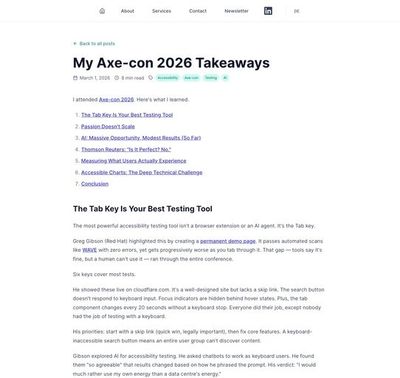
Multiple org case studies and one truth: accessibility scales through structure, not passion. Key takeaways from Axe-con 2026.
|
|
|
📋 The Bigger Picture
|

|
|
23% of screen reader users are not blind - Lauren, a film editor with ADHD, uses one to process text. Ela Gorla from TetraLogical dismantles seven misconceptions: hidden help text creates noise, making everything focusable breaks H-key navigation, and separate versions inevitably drift.
|
|
|
|
|
86% of disabled consumers pay more on an accessible site than buy cheaper elsewhere. Tesco partnered with RNIB and saw 350% more online sales. With $13 trillion in combined spending power, Accenture and Forrester data confirms: every dollar in accessibility yields roughly $100 back.
|
|
|
|
|
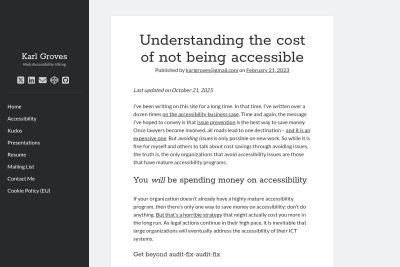
134 issues per audit, 7 hours to fix each, $2,590 per bug - Karl Groves calculates $347,060 in disruption costs for one audit cycle. He calls the audit-fix-repeat loop "the worst accessibility strategy" and argues only prevention during development breaks it.
|
|
|
⚙️ In Practice
|

|
|
Gloves on, bus ride, tiny like button - no chance. Ilknur Eren's CSS fix on SitePoint: a button with width: 48px and padding: 12px. The icon stays compact, the tap area exceeds both WCAG thresholds (24x24 AA, 44x44 AAA). Benefits everyone on mobile, not just users with motor impairments.
|
|
|
|
|
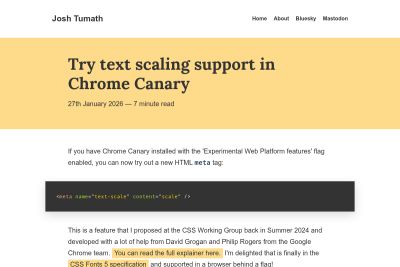
37% of Android users have changed their system text size - but mobile browsers ignore it. Josh Tumath from the BBC introduces an opt-in meta tag in Chrome Canary that respects these settings. CSS guidance included (rem/em for content, px for spacing) - a parallel to the viewport meta tag era.
|
|
|
|
|
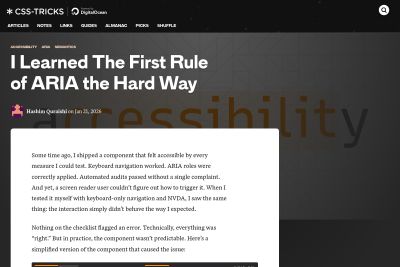
Automated audits passed, keyboard worked - yet screen readers couldn't activate the button. Hashim Quraishi had added role="link" to a <button>, breaking Space key and causing NVDA to announce conflicting roles. The fix was less code, not more: delete the ARIA attribute and trust native HTML.
|
|
|
|
View in browser
Unsubscribe
|
|
|
© 2026 Jan Deppisch ·
jandeppisch.de
|